
Research Projects and Publications
Despite their size, microbes are ubiquitous and seem to impact every aspect of life on Earth – from disease to climate change, biofuels to food, and the environment to our own body.
I first became interested in studying the Archaea – the lesser-studied third Domain of Life, distinct from Bacteria and Eukaryotes like us – while a graduate student. There, I focused on archaea found in the oceans, unlike the ‘extremophiles’ we are used to studying in hot springs and salt lakes. These Thaumarchaeota (now found in nearly every biome on Earth, including estuaries, lakes, soils, sediment, hot springs, etc.) are are key players in the global Nitrogen Cycle that take part in the first step of nitrification – the transformation of ammonia (a typical waste product and component of agricultural fertilizer) to nitrite. Have you ever purchased a “bioactive” rock for your fish tank at home, or seen an “activated sand” filter at an aquarium? If so, you have most certainly come in close contact with nitrification and perhaps even these ammonia-oxidizing Thaumarchaeota!
Current Research Projects:
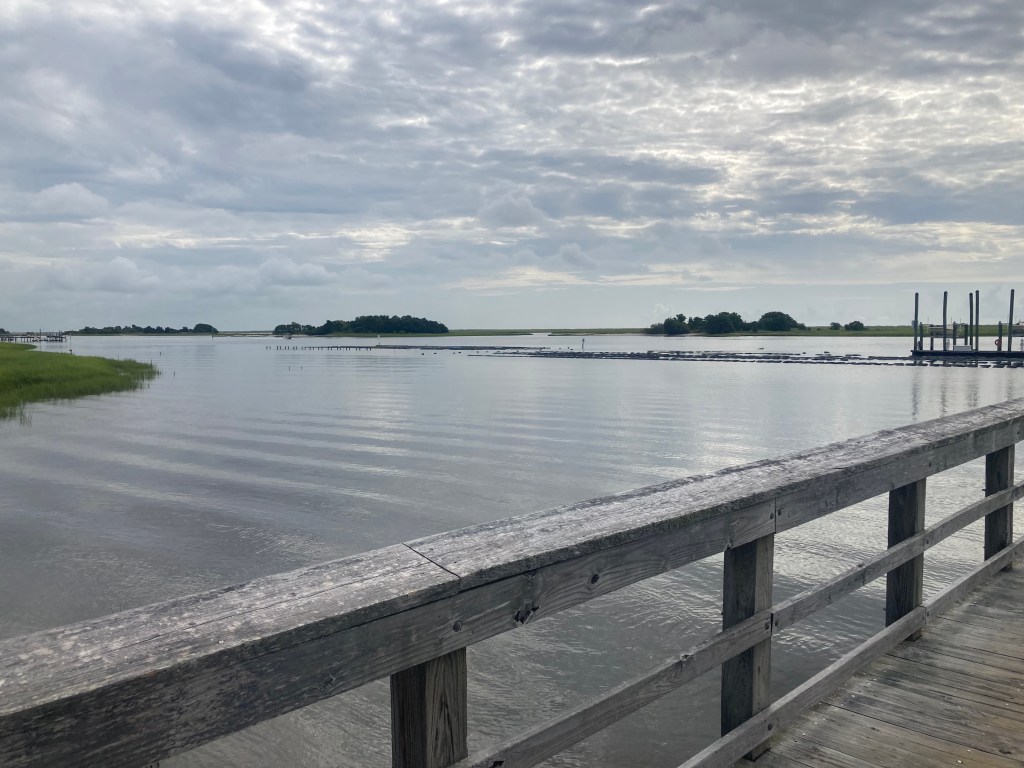
Seasonal changes in archaeal populations along the North Carolina coast and Cape Fear River
- Collecting water samples and nutrients from the UNCW Center for Marine Science Dock and Cape Fear River semi-monthly
- Monitoring abundance of Thaumarchaeota using quantitative PCR, to investigate seasonal dynamics including the annual summer bloom observed along East Coast
- Also measuring Dissolved Inorganic Nitrogen (DIN) concentrations and other physicochemical characteristics to investigate how they impact these archaea

Investigation of Host-Associated Ammonia-Oxidizing Archaea (AOA) Among Coastal Marine Invertebrates
- Surveying various species for symbiotic AOA to better understand oceanic nitrogen cycling on a system level.
- Building upon expertise at UNCW, including the Shellfish Research Hatchery, Coral REEF Lab, and iMESA Lab, we will further delve into host-associated archaea within these organisms.
Transect Expedition to Assess Land-to-Sea Habitats via Interdisciplinary Process Studies (TEAL-SHIPS)
- Funded by the UNC System Research Opportunities Initiative, this project will build capacity at UNCW in Marine Science research through collaborations among UNCW scientists in Biology, Chemistry, and Physics alongside others at UNC Chapel Hill, NCSU, ECU, and CFCC.
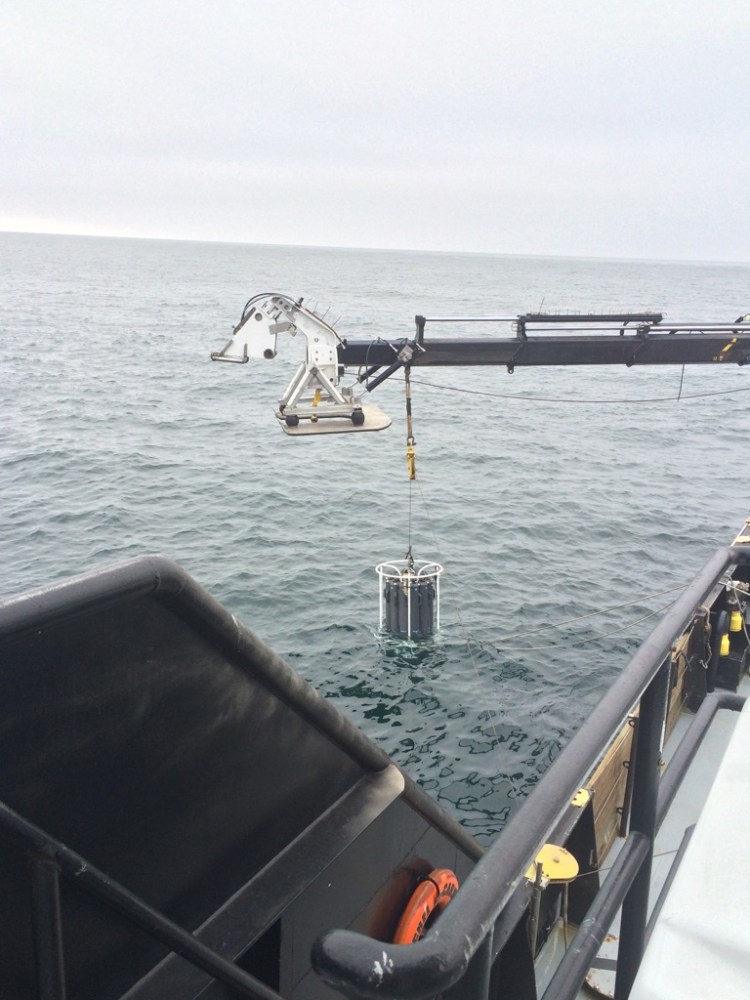
- Our goal is to synthesize biological, physical, and chemical data to understand the gradients along North Carolina’s coastline, from the mouth of the Cape Fear River to the Gulf Stream. You can read more about this project here: https://uncw.edu/research/projects/transect-expedition/ (Photo Credit: Jeff Janowski, UNCW OUR)


Examining the Impacts of Salinity Intrusion and Vegetative Shifts on Microbial Carbon Cycling along the Cape Fear River
- Collaboration with Dr. Lori Sutter (wetland ecology) and Dr. Winn Johnson (chemical ecology) to investigate how our local coastal ecosystems are changing with rising seas. Thus far, this work is supported through a UNCW Cahill Award and a Molecular Observation Network (MONet) Soil Sampling Award.
- Our lab’s focus is to examine how microbial communities contribute to and change carbon dioxide and methane cycling particularly, as well as how community diversity and function are impacted along a wetland salinity gradient.
Impact of Surface Mining Activities on Wetland Restoration
- At the Mission Mine in southern Georgia, wetlands previously mined for minerals have been restored and replanted with a goal to reestablish lost functions and ecosystem services. This project is funded by Southern Ionics.
- Led by Dr. Lori Sutter in collaboration with Dr. Dan Markewitz (UGA), together we are determining whether plants, soil chemistry, and/or microorganisms have recovered following this disturbance. (Photo Credit: Megan Aislinger)

Seasonal dynamics of marine Thaumarchaeota in a coastal upwelling system – Monterey Bay, California
- Collected DNA and RNA, and measured a suite of physicochemical variables and nitrification rates for two years at two sites in collaboration with the Monterey Bay Aquarium Research Institute (MBARI)
- Sequenced 16S rRNA, 18s rRNA, metagenomes, and metatranscriptomics
- Ran quantitative PCR assays for distinct Thaumarchaeota ecotypes (“species”): -‘Shallow’ water column A (WCA)
-‘Deep’ water column B (WCB)
-Nitrosopumilus-like group (Nmar) - Generated metagenome-assembled genomes (MAGs) from datasets to gain more insight in lesser studied ecotypes (analysis in progress)
- Resulting Publications include:
-Reji, Tolar, et al., 2019a (ISME J, #16),
-Reji, Tolar, et al., 2019b (Env Micro, #18), -Tolar et al., 2020 (Limnol Oceanogr #21), -Reji, Tolar, et al., 2020 (Frontiers #22)
Funded by a grant from NSF Biological Oceanography (to C. Francis and F. Chavez)

Characterization of a low salinity ammonia-oxidizing archea: Nitrosarchaeum limnium
- Maintained laboratory enrichment cultures (>97 % N. limnium) of two strains collected from the San Francisco Bay Delta
- Characterized optimal growth conditions
- Performed experiments measuring responses of N. limnium to environmental stress including temperature, salinity, & pH (analysis in progress)
- Published chapter in Bergey’s Manual (#20, below) describing the genus Nitrosarchaeum
Funded in part through the JGI Small-Scale Sequencing Program (B. Tolar, & C. Francis)
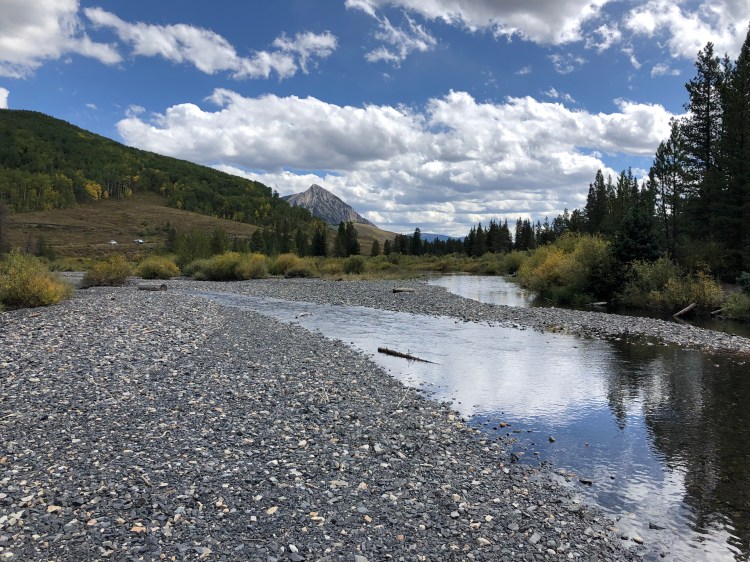
Connections between microorganisms and geochemistry in a high-altitude floodplain along the Slate River near Crested Butte, Colorado
- Collected microbial and geochemical samples across multiple field seasons to investigate changes as hydrological regimes shift from snowmelt to wet to dry
- Performed inundation experiments in the field to investigate microbial responses to “wet-up” events
- Sequenced 16S rRNA to characterize the microbial community and monitor changes from field samples and experiments (analysis in progress)
Funded through the SLAC Groundwater Quality SFA Program (PI: J. Bargar) under DOE Biological & Environmental Research

Metabolic capacity and seasonal changes in nitrogen-cycling communities within uranium-contaminated floodplain sediments near Riverton, Colorado
- Follow-up to our 2017 investigations of microbial community dynamics during flood vs drought periods and their relationship with metals (#23: Tolar et al., 2019, Frontiers)
- Includes metagenomic and metatranscriptomic sequencing, in addition to 16S rRNA-based community analysis, to generate MAGs and characterize mircobial metabolisms (analysis in progress)
Funded in part by a DOE grant (to C. Francis) and the SLAC Groundwater Quality SFA Program (PI: J. Bargar, DOE BER). Additional sequencing through a collaborative FICUS project through JGI and EMSL (K. Boye, C. Francis, and B. Tolar)
Relevant Publications (underlined names indicate Tolar Lab students and trainees)
- Rasmussen, A.N., B.B. Tolar, J.R. Bargar, K. Boye, & C.A. Francis (2024). Diverse and unconventional methanogens, methanotrophs, and methylotrophs in metagenome-assembled genomes from subsurface sediments of the Slate River floodplain, Crested Butte, CO, USA. mSystems 9: e00314-24.
- Papke, E., G.E. Kennedy, E. Elliott, A. Taylor, B.B. Tolar, & B. Ushijima (2024). Transmission Electron Microscopy of Coral Tissue. Curr Protocols 4: e70033.
- DeMirci, H., J. Johnson, B. Tolar, B. Tosun, Y. Yoshikuni, C. Francis, & S. Wakatsuki, S. (2024). Crystal structure of the 4-hydroxybutyryl-CoA synthetase (ADP-forming) from Nitrosopumilus maritimus. Comms Bio 7: 1364.
- Naughton, H.R., B.B. Tolar, C. Dewey, M. Keiuluweit, P.S. Nico, and S. Fendorf. Reactive iron, not fungal community, drives organic carbon oxidation potential in floodplain soils (2023). Soil Biol & Biogeochem 178: 108962.
- Babey, T., K. Boye, B. Tolar, M. Engel, V. Noël, Z. Perzan, N. Kumar, C.A. Francis, J.R. Bargar, and K. Maher. Simulations of anoxic lenses as exporters of reactivity in alluvial sediments (2022) Geochim Cosmochim Acta 334: 119-134.
- Aeppli, M., T. Babey, M. Engel, E. LaCroix, B. Tolar, S. Fendorf, J. Bargar, and K. Boye. Export of organic carbon from reduced fine-grained zones governs biogeochemical activity in simulated aquifer (2022) Environ Sci & Tech 56: 2738-2746.
- Destan, E., B. Yuksel, B.B. Tolar, E. Ayan, S. Deutsch, Y. Yoshikuni, S. Wakatsuki, C.A. Francis, and H. DeMirci. Structural insights into bifunctional thaumarchaeal crotonyl-CoA hydratase and 3-hydroxypropionyl-CoA dehydratase from Nitrosopumilus maritimus (2021) Sci Reports 11: 22849.
- Tolar, B.B., K. Boye, C. Bobb, K. Maher, J.R. Bargar, and C.A. Francis. Stability of floodplain subsurface microbial communities through seasonal hydrological and geochemical cycles (2020). Front Earth Sci. 8: 338.
- Reji, L., B.B. Tolar, F.P. Chavez, and C.A. Francis. Depth-differentiation and seasonality of planktonic microbial assemblages in the Monterey Bay upwelling system (2020). Front Aquat Microbiol. 11:1075.
- Tolar, B.B., L. Reji, J.M. Smith, M. Blum, J.T. Pennington, F.P. Chavez, and C.A. Francis. Time series assessment of Thaumarchaeota ecotypes in Monterey Bay reveals the importance of water column position in predicting distribution-environment relationships (2020). Limnol Oceanogr. 65: 2041-2055.
- Tolar, B.B., A.C. Mosier, M.B. Lund, and C.A. Francis. Nitrosarchaeum (gbm01289). In: Bergey’s Manual of Systematics of Archaea and Bacteria, Ed: W.B. Whitman, John Wiley & Sons: Hoboken, NJ (2019).
- Damashek, J., C.F. Edwardson, B.B. Tolar, S.M. Gifford, M.A. Moran, and J.T. Hollibaugh. Coastal ocean metagenomes and curated metagenome-assembled genomes (MAGs) from Marsh Landing, Sapelo Island (Georgia, USA) (2019). Microbiol Resour Announc 8: e00934-19.
- Reji, L. B.B. Tolar, J.M. Smith, F.P. Chavez, and C.A. Francis. Depth distributions of nitrite reductase (nirK) gene variants reveal spatial dynamics of thaumarchaeal ecotype populations in coastal Monterey Bay (2019). Environ Microbiol. 21: 4032-4045.
- Damashek, J., B.B. Tolar, Q. Liu, A.O. Okotie-Oyekan, N.J. Wallsgrove, B.N. Popp, and J.T. Hollibaugh. Microbial oxidation of nitrogen supplied as selected organic nitrogen compounds in the South Atlantic Bight (2019). Limnol Oceanogr 64: 982-995.
- Reji, L., B. B. Tolar,J.M. Smith, F.P. Chavez, and C.A. Francis. Differential co-occurrence relationships shaping ecotype diversification within Thaumarchaeota populations in the coastal ocean water column (2019). ISME J 13: 1144-1158.
- Li, P-N., J.R. Herrmann,F.P.B. Poitevin, R. Ramdasi, B.B. Tolar,J. Bargar, D. Stahl, G. Jensen, S. Wakatsuki, and H. van den Bedem. Cryo electron tomography and reaction-diffusion simulations reveal a molecular and evolutionary basis for charged archaeal surface layer proteins (2018). Biophys J 114: 495A.
- Li, P-N., J. Herrmann, B.B. Tolar,F. Poitevin, R. Ramdasi, J.R. Bargar, D.A. Stahl, G.J. Jensen, C.A. Francis, S. Wakatsuki, and H. van den Bedem. Nutrient transport suggests an evolutionary basis for charged archaeal surface layer proteins (2018). ISME J 12: 2389-2402.
- Liu, Q., B.B. Tolar, M.J. Ross, J.B. Cheek, C.M. Sweeney, N.J. Wallsgrove, B.N. Popp, and J.T. Hollibaugh. Light and temperature control the seasonal distribution thaumarchaeota in the South Atlantic Bight(2018). ISME J 12: 1473-1485.
- Tolar, B.B., N.J. Wallsgrove, B.N. Popp, and J.T. Hollibaugh. Oxidation of urea nitrogen in Thaumarchaeota-dominated marine nitrifying communities (2017). Environ Microbiol 19: 4838-4850.
- Tolar, B.B., J. Herrmann, J.R. Bargar, H. van den Bedem, S. Wakatsuki, and C.A. Francis. Integrated structural biology and molecular ecology of N-cycling enzymes from ammonia-oxidizing Archaea (2017). Environ Microbiol Reports 9: 484-491.
- Kremer, C.T., A.K. Williams, M. Finiguerra, A.A. Fong, A. Kellerman, S.F. Paver, B.B. Tolar, and B.J. Toscano. Realizing the potential of trait-based aquatic ecology: new tools and collaborative approaches (2017). Limnol Oceanogr 62: 253-271. *Eco-DAS
- Tolar, B.B., L.C. Powers, W.M. Miller, N.J. Wallsgrove, B.N. Popp, and J.T. Hollibaugh. Ammonia oxidation in the ocean is inhibited by hydrogen peroxide (2016). Front Mar Sci 3: 237.
- Hundey, E.J., J.H. Olker, C. Carriera, R.M. Daigle, A.K. Elgin, M. Finiguerra, N.J. Gownaris, N. Hayes, L. Heffner, N.R. Razavi, P.D. Shirey, B.B. Tolar, and E.M. Wood-Charlson. A shifting tide: Recommendations for incorporating science communication into graduate training (2016). Limnol Oceanogr Bulletin 25: 109-116. *Eco-DAS
- Tolar, B.B., M.J. Ross, N.J. Wallsgrove, Q. Liu, L.I. Aluwihare, B.N. Popp, and J.T. Hollibaugh. Significant rates of chemoautotrophy in Antarctic coastal waters attributed to ammonia oxidation by Thaumarchaeota (2016). ISME J 10: 2605-2619.
- Liu, Q., X. Lu, B.B. Tolar, X. Mou, and J.T. Hollibaugh. Concentrations, turnover rates and fluxes of polyamines in coastal waters of the South Atlantic Bight (2015). Biogeochemistry 123: 117-133.
- Luo, H., B.B. Tolar, B.K. Swan, C.L. Zhang, R. Stepanauskas, M.A. Moran, and J.T. Hollibaugh. Single cell genomes of marine thaumarchaeota reveal insights into population differentiation by depth (2014). ISME J 8: 732-736.
- Hollibaugh, J.T., S.M. Gifford, M.A. Moran, M. Ross, S. Sharma, and B.B. Tolar. Seasonal variation in the metatranscriptomes of a Thaumarchaeota population from SE USA coastal waters (2014). ISME J 8: 685-698.
- Smith, C.B., B.B. Tolar, J.T. Hollibaugh, and G.M. King. Alkane hydroxylase gene (alkB) phylotype composition and diversity in northern Gulf of Mexico bacterioplankton (2013). Front Aquat Microbiol 4: 370.
- Tolar, B.B., G.M. King, and J.T. Hollibaugh.An analysis of Thaumarchaeota populations from the northern Gulf of Mexico (2013). Front Aquat Microbiol 4: 72.
- King, G.M., C. Smith, B. Tolar, and J.T. Hollibaugh. Analysis of composition and structure of coastal to mesopelagic bacterioplankton communities in the northern Gulf of Mexico (2013). Front Microbiol 3: 438.
Lab Presentations – for more information on research presentations, posters, and seminars given by members of the Tolar Lab, click here!
 Tolar Lab @ UNCW